Circus SE Prepares U.S. Market Entry With Autonomous Kitchen Robots
German Physical AI company bets on specialized robots over humanoids, with more than 30 systems in operation. Circus SE
Press Release Disclaimer: This is a press release distributed through the XPR Media network. It has not been independently verified by our newsroom.
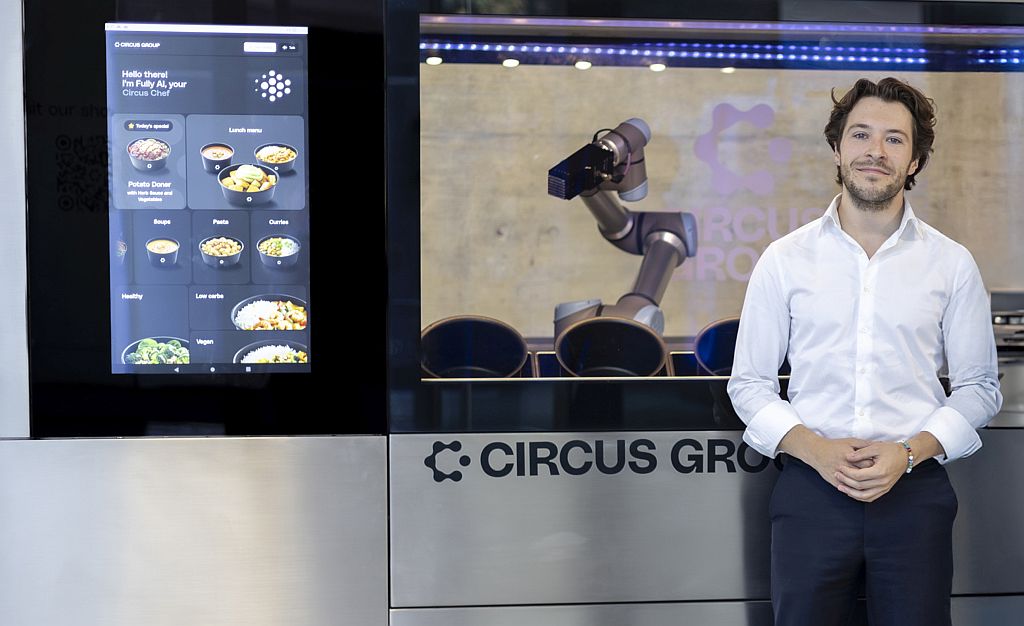

German Physical AI company bets on specialized robots over humanoids, with more than 30 systems in operation.
Circus SE (XETR:CA1)
MUNICH, BAVARIA, GERMANY, November 19, 2026 /EINPresswire.com/ — Circus SE (Xetra: CA1), a developer of AI-powered robots that prepare meals autonomously, is preparing to enter the U.S. market. The move builds on its acquisition of U.S.-Israeli robotics company K-Robotics, completed in late April 2026. Circus is betting that industry-specific systems that reliably handle one economically important workflow – not general-purpose humanoid robots – will drive the first commercial wave of Physical AI.
“Physical AI doesn’t need to automate everything. It needs to automate the right things,” said Nikolas Bullwinkel, founder and CEO of Circus SE.
Access to the U.S. Market Through K-Robotics
Through K-Robotics, Circus acquired more than 30 international robotics patents, along with software, control algorithms, sensor technology and NSF-certified components and systems. In the U.S. foodservice industry, NSF certification is considered a standard requirement for food equipment to enter the market. The acquisition allowed Circus to move its U.S. launch forward from the originally planned 2027; the company has not yet announced a specific date. According to Bullwinkel, Circus is entering the United States “from a position of strength.”
Circus’s launch in Abu Dhabi in September 2026 shows how the company enters new markets: Caterer Royal Prestige contributes customers, kitchen operations and logistics and sources ingredients locally, while Circus supplies the robots and software.
According to the National Restaurant Association, the U.S. restaurant industry is expected to generate $1.55 trillion in sales in 2026, with real growth of 1.3%. Forty-two percent of operators were unprofitable the previous year. Circus cites labor shortages and cost pressures as key drivers of automation.
One Robot, Three Revenue Streams
The company’s core product is the CA-1. In a footprint of about 75 square feet, it stores up to 36 ingredients under refrigeration, cooks at four induction stations and prepares around 800 meals a day. Contract manufacturer Celestica builds the system, with a target capacity of up to 6,000 units per year.
“We see ourselves much more as an AI software provider than as a robotics competitor,” Bullwinkel said. The business model combines hardware (a CA-1 costs up to €250,000, and leasing is available), licenses for the CircusOS operating system (up to €10,000 per unit per month) and consumables: Circus Pods are standardized ingredient containers that the robot scans when they are loaded. According to the company, they are in use at nearly all customer sites and can reduce daily operating time by up to 80%.
Customers include Meta, where the first commercial CA-1 began operating at the company’s Munich site in fall 2025, German supermarket chain REWE, the German Armed Forces, the armed forces of Ukraine and a NATO site in Lithuania.
Operational Progress After Strategic Reset
In July 2026, Circus cut its 2026 revenue forecast from €44 million–€55 million to €5.2 million and now expects EBITDA of around negative €17 million. The company said the time and cost required for onboarding, integration and service per system had not developed as planned. Circus subsequently slowed its rollout and focused on reliability and operating costs.
According to the company’s third-quarter 2026 update, more than 30 systems are now in operation, and the deployment pace has tripled. Availability at established sites rose from around 70% at the start of the year to more than 93%, while operating costs fell by nearly 25% from the previous quarter. Commissioning a system now takes about five days, down from nearly nine, and average daily operating time has fallen from three to four hours to 1 hour and 47 minutes. The fleet has prepared more than 230,000 meals to date.
Since October 2026, Christian Bauer, previously with Volocopter and Daimler, has led the company as co-CEO and CFO alongside Bullwinkel, who co-founded quick-commerce grocery delivery service Flink in 2020.
About Circus SE
Circus SE, based in Munich, develops AI-powered robots that prepare meals autonomously. Its core product, the CA-1, runs on the in-house operating system CircusOS and the agentic AI platform FullyAI. The product family also includes the CA-A for shakes and smoothies and the CA-M, a containerized version for military use. Founded in 2021 by Nikolas Bullwinkel, Circus positions itself as a dual-use technology company serving civilian and defense food supply. The company has around 85 employees and is listed on Xetra. [https://www.circus-group.com/]
Elena Coles
Circus SE
Visit us on social media:
LinkedIn
Instagram
YouTube
X
Legal Disclaimer:
EIN Presswire provides this news content “as is” without warranty of any kind. We do not accept any responsibility or liability
for the accuracy, content, images, videos, licenses, completeness, legality, or reliability of the information contained in this
article. If you have any complaints or copyright issues related to this article, kindly contact the author above.

Media gallery